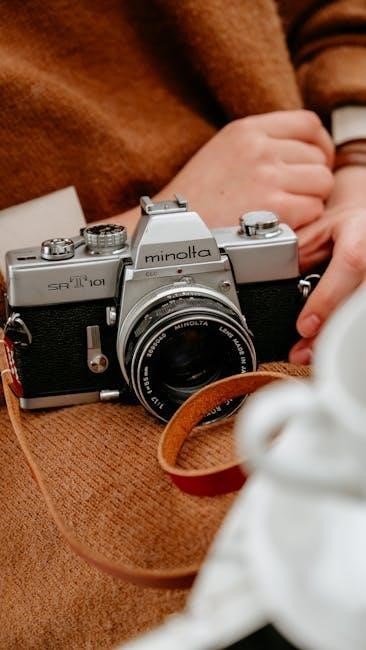
The Minolta Maxxum 7000, a groundbreaking 35mm SLR, revolutionized photography with its innovative features.
Numerous online resources, including freely downloadable instruction manuals from the Internet Archive,
facilitate understanding and operation of this classic camera. These manuals, alongside service guides,
empower users to maintain and even repair their beloved Minolta Maxxum 7000, ensuring its longevity.
Overview of the Camera
The Minolta Maxxum 7000, launched in 1985, was a pivotal camera, introducing advanced features to a wider audience. Accessible instruction manuals, readily available online via platforms like the Internet Archive, detail its operation. These guides cover everything from film loading to utilizing its sophisticated autofocus system.
The camera’s user-friendly design, coupled with comprehensive documentation, made it a favorite among both amateur and professional photographers, solidifying its place in photographic history.
Historical Context and Significance
The Minolta Maxxum 7000 arrived during a crucial shift in camera technology, pioneering autofocus for the masses. Its 1985 debut challenged established brands and spurred innovation. Accessible instruction manuals, now digitized and freely available, demonstrate Minolta’s commitment to user experience. The camera’s impact extends beyond its features; it democratized advanced photography,
making it more approachable and influencing subsequent camera designs.
Key Features and Specifications
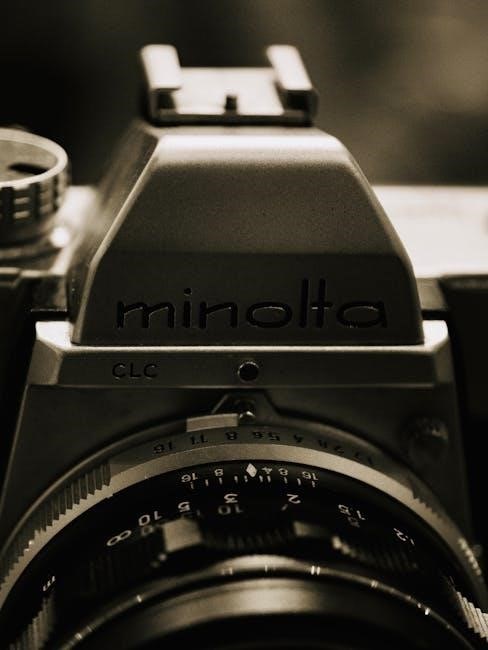
The Minolta Maxxum 7000 boasts a sophisticated autofocus system and versatile shooting modes. Detailed instruction manuals outline its specifications,
including shutter speed range and metering capabilities, for optimal performance.
Sensor and Image Quality
The Minolta Maxxum 7000, utilizing 35mm film, doesn’t have a digital sensor in the modern sense. Image quality is dictated by the chosen film stock – its ISO, color balance, and grain structure.
The camera’s optics and precise metering system, detailed within the instruction manual, contribute significantly to sharpness and accurate exposure. Understanding film characteristics, as explained in supplemental guides, is crucial for achieving desired results.
Autofocus System Details
The Minolta Maxxum 7000 pioneered autofocus technology in SLRs. The instruction manual details its three autofocus modes: Single, Continuous, and Manual. Utilizing a TTL phase-detection system, it offers reliable focusing with compatible lenses. Understanding the autofocus points and their selection, as outlined in the manual, is key to sharp images.
Metering System Explained
The Minolta Maxxum 7000 employs a dual-center weighted metering system, detailed within its instruction manual. This system evaluates light from the central portion of the frame. The manual explains spot metering for precise exposure in challenging conditions. Users can also utilize exposure compensation to fine-tune readings, ensuring correctly exposed photographs.
Understanding the Control Layout
The Minolta Maxxum 7000’s control layout, thoroughly documented in the instruction manual, offers intuitive operation. Familiarizing yourself with the top, rear, and bottom panel controls is essential for seamless photography.
Top Panel Controls
The Minolta Maxxum 7000’s top panel houses essential controls, detailed within the instruction manual. These include the main dial for mode selection (P, A, S, M), the shutter button with depth-of-field preview, and the film advance lever.
Additionally, users will find the electronic viewfinder adjustments and the pop-up flash release button. Understanding each control’s function, as outlined in the manual, is crucial for efficient operation and achieving desired photographic results.
Rear Panel Controls
The Minolta Maxxum 7000’s rear panel, as explained in the instruction manual, features controls for reviewing images and adjusting settings. Key elements include the LCD screen displaying shooting information, the directional buttons for menu navigation, and the exposure compensation dial. Users also find the focus mode selector and the drive mode selector, vital for customizing shooting preferences.
Bottom Panel and Compartments
The Minolta Maxxum 7000’s bottom panel, detailed in the instruction manual, houses the battery compartment and the film rewind crank. Accessing the battery compartment requires a secure latch release. The film rewind crank facilitates easy film rewinding after exposure. Users should consult the manual for proper battery insertion and film loading procedures, ensuring correct operation.
Operating Modes Explained
The Minolta Maxxum 7000 instruction manual details Program, Aperture Priority, and Shutter Priority modes. These modes offer varying levels of user control over exposure settings, enhancing photographic creativity.
Program Mode (P)
Program Mode (P) on the Minolta Maxxum 7000, as explained in the instruction manual, offers a fully automatic shooting experience. The camera intelligently selects both the aperture and shutter speed based on the scene’s lighting conditions.
This mode is ideal for general photography, allowing users to focus on composition and capturing the moment without needing to worry about technical settings. Program mode also allows for exposure compensation, providing some creative control.
Aperture Priority (A)
Aperture Priority (A), detailed in the Minolta Maxxum 7000’s manual, lets photographers control the lens aperture while the camera automatically sets the shutter speed. This mode is excellent for managing depth of field – a shallow depth for portraits, or a large one for landscapes; The manual clarifies how to adjust aperture for creative effects and optimal exposure.
Shutter Priority (S)
Shutter Priority (S), as explained in the Minolta Maxxum 7000 instruction manual, allows photographers to select a shutter speed, with the camera automatically adjusting the aperture. This mode excels at freezing motion with fast speeds or blurring it with slower ones. The manual details how to utilize this for action shots and creative effects.
Using the Flash System
The Minolta Maxxum 7000’s instruction manual details both built-in flash functionality and compatibility with external flash units. It explains modes and settings for optimal illumination.
Built-in Flash Functionality
The Minolta Maxxum 7000’s integrated flash offers several modes, comprehensively explained within the instruction manual. These include auto, fill-flash, and off settings, catering to diverse shooting scenarios. The manual details how the camera automatically calculates appropriate flash exposure, ensuring well-lit images.
Users can also manually adjust flash output for creative control. The guide number is specified, aiding in distance calculations for proper exposure. Understanding these features, as outlined in the manual, unlocks the full potential of the built-in flash system.
External Flash Compatibility
The Minolta Maxxum 7000 boasts compatibility with a range of external flash units, expanding creative lighting possibilities. The instruction manual details the hot shoe interface and synchronization modes available. It clarifies how to utilize dedicated Minolta flashes for TTL (Through-The-Lens) metering,
achieving accurate and automated flash exposure.
Non-dedicated flash units can also be used in manual mode, requiring users to set flash power independently. The manual provides guidance on proper settings for optimal results with various external flash options.
Navigating the Menu System
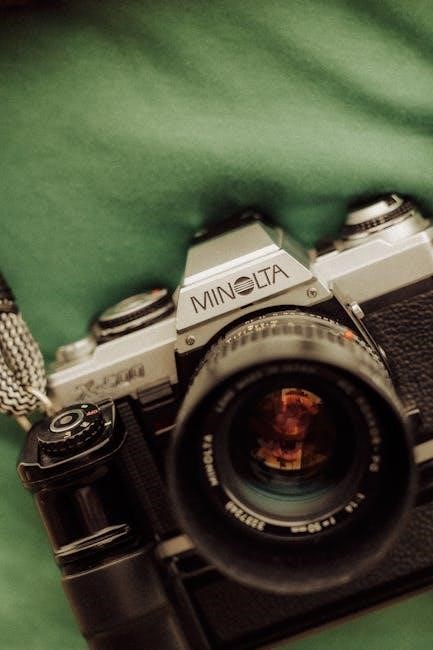
The Minolta Maxxum 7000’s menu, accessed via camera buttons, allows customization of settings. The instruction manual thoroughly explains each menu option,
enabling users to tailor the camera to their specific photographic needs and preferences.
Menu Structure Overview
The Minolta Maxxum 7000’s menu system, detailed in the instruction manual, is logically organized into several key sections. These include settings for film type, ISO, autofocus, metering, and flash control. Users navigate using the directional buttons and confirm selections with the set button.
The manual provides clear diagrams and explanations of each menu item, ensuring even novice photographers can easily adjust camera parameters to achieve desired results.
Customization Options
The Minolta Maxxum 7000, as outlined in its manual, offers several customization options to tailor the camera to individual preferences. Users can adjust autofocus sensitivity, metering patterns, and even customize the display information. These settings allow photographers to optimize the camera’s performance for various shooting conditions and personal styles, enhancing creative control.
Troubleshooting Common Issues
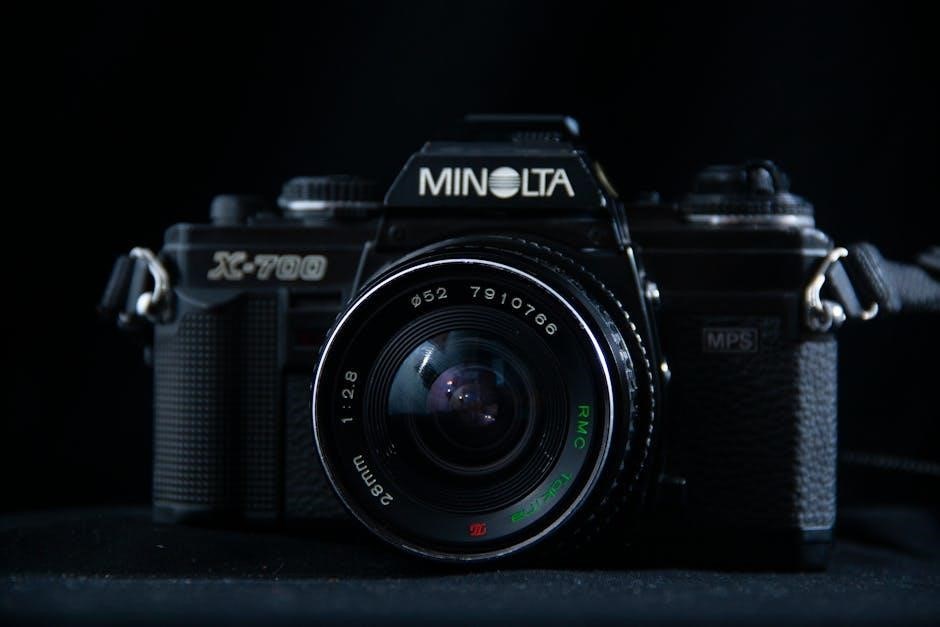
The Minolta Maxxum 7000 manual details solutions for autofocus, exposure, and battery problems. These guides help users diagnose and resolve typical operational challenges quickly and efficiently.
Autofocus Problems
The Minolta Maxxum 7000’s instruction manual addresses autofocus issues, suggesting checks for low light, high contrast scenes, and lens compatibility. If autofocus fails, the manual recommends verifying the AF mode selection and ensuring the focus area is appropriate for the subject.
Cleaning the autofocus sensors is also advised, as dust or debris can interfere with performance. Furthermore, the manual details how to switch to manual focus if autofocus consistently malfunctions, offering a workaround until the issue can be resolved.
Exposure Errors
The Minolta Maxxum 7000’s manual details troubleshooting for exposure errors, emphasizing proper battery function and film speed setting. Incorrect settings can lead to under or overexposure. The guide instructs users to verify the selected shooting mode (P, A, S) aligns with their desired creative control.
If errors persist, the manual suggests checking the lens aperture and shutter speed settings, and ensuring the metering mode is suitable for the scene. Resetting the camera to factory defaults is also recommended.
Battery Issues
The Minolta Maxxum 7000 manual specifies using a 2CR5 lithium battery. Common issues include incorrect battery installation or depleted power. The guide advises checking battery contacts for corrosion and ensuring proper polarity during replacement. Low battery warnings appear in the viewfinder.
If the camera fails to power on, the manual suggests trying a fresh battery and verifying the battery compartment is securely closed. Avoid mixing old and new batteries.
Maintenance and Care
The Minolta Maxxum 7000 manual stresses regular cleaning of the camera body with a soft cloth. Proper lens care and storage, away from direct sunlight, are vital.
Cleaning the Camera Body
The Minolta Maxxum 7000’s manual recommends gentle cleaning with a soft, dry cloth to remove dust and fingerprints. Avoid using harsh chemicals or solvents, as these can damage the camera’s finish. For stubborn dirt, lightly dampen the cloth with water, ensuring no moisture enters the camera’s internal components. Pay particular attention to the viewfinder and LCD screen, using appropriate cleaning solutions designed for delicate optics. Regular, careful cleaning preserves the camera’s appearance and functionality.
Lens Care and Storage
The Minolta Maxxum 7000’s manual stresses the importance of lens cleanliness. Use a blower to remove loose dust, followed by a lens brush for gentle cleaning. For fingerprints, apply lens cleaning fluid sparingly to a microfiber cloth and wipe in a circular motion. Store lenses in a dry, dust-free environment, ideally within a dedicated lens case, to prevent damage and maintain optimal performance.
Advanced Techniques
The Minolta Maxxum 7000 manual details depth-of-field control and filter usage. Mastering these techniques unlocks creative potential, enhancing image quality and artistic expression.
Depth of Field Control
The Minolta Maxxum 7000’s manual explains how aperture settings directly influence depth of field. Smaller apertures (higher f-numbers) yield greater depth, keeping more of the scene sharp, ideal for landscapes. Conversely, wider apertures (lower f-numbers) create shallow depth, isolating subjects with blurred backgrounds – perfect for portraits. Understanding this relationship, coupled with focal length, allows photographers to creatively control focus and draw attention to specific elements within the frame, enhancing visual storytelling.
Using Filters
The Minolta Maxxum 7000 accepts filters via a standard filter thread, enhancing photographic possibilities. The instruction manual details filter types – UV for lens protection, polarizing filters to reduce glare and boost colors, and neutral density filters for long exposures. Correct filter selection and attachment, as outlined in the manual, are crucial for achieving desired effects and protecting the lens element.
Resources and Further Information
Online resources, like the Internet Archive, offer free Minolta Maxxum 7000 instruction manuals. Service manuals are also available, aiding repair and deeper understanding.
Online Manuals and Support
Numerous websites provide access to the Minolta Maxxum 7000’s instruction manual in digital format, often as downloadable PDFs or through Internet Archive’s lending library. These resources are invaluable for understanding the camera’s functions and features. Beyond the owner’s manual, service manuals detailing repair procedures are also available online. Dedicated photography forums and communities offer support, troubleshooting advice, and shared experiences from fellow enthusiasts, fostering a collaborative learning environment for Maxxum 7000 users.
Repair Services
While self-repair is possible with the aid of the detailed service manuals available online, professional repair services are also an option for Minolta Maxxum 7000 owners. Specialized camera repair shops often possess the expertise and parts necessary to address complex issues. Locating a technician familiar with older film cameras is crucial. Online forums can provide recommendations for reputable repair services, ensuring your Maxxum 7000 receives qualified attention and continues functioning optimally.
Minolta Maxxum 7000 vs. Competitors
Compared to contemporaries, the Maxxum 7000’s innovative autofocus and user-friendly design, detailed in its instruction manual, offered a competitive edge. It stood out in the market.
Comparison with Contemporary Cameras
The Minolta Maxxum 7000, guided by its comprehensive instruction manual, contrasted sharply with rivals like the Canon EOS 650 and Nikon N6000. While those cameras also embraced autofocus, the Maxxum 7000’s system felt remarkably intuitive. Its manual clearly explains features, offering a smoother learning curve. Competitors often required more complex settings adjustments, lacking the Maxxum’s accessible design. The availability of free downloadable manuals further enhanced its appeal, fostering a dedicated user base.
Strengths and Weaknesses
The Minolta Maxxum 7000’s strength, detailed in its instruction manual, lies in its user-friendliness and innovative autofocus. However, the manual also reveals limitations. Early autofocus performance wasn’t always perfect, and the camera’s plastic construction felt less robust than some competitors. Despite these weaknesses, the readily available, free downloadable manual empowers users to maximize its potential, mitigating operational challenges and extending its lifespan.
Understanding the Service Manual
The Minolta Maxxum 7000 service manual, available online, provides detailed repair information. Complementing the user’s instruction manual, it aids advanced troubleshooting and component-level maintenance.
Accessing the Service Manual
Fortunately, the Minolta Maxxum/Dynax/Alpha 7000 service manual is readily accessible through the Internet Archive. This valuable resource offers a free download or streaming option, providing detailed schematics and repair procedures.
Searching “Minolta Maxxum 7000 Service Manual” on the Internet Archive will quickly locate the 156.4MB file.
This digital availability empowers enthusiasts and technicians alike to maintain and restore this classic camera.
Key Sections of the Service Manual
The Minolta Maxxum 7000 service manual comprehensively details the camera’s internal workings. Key sections include exploded diagrams for parts identification, precise adjustment procedures for the autofocus and metering systems, and troubleshooting guides for common malfunctions. Electrical schematics and detailed component layouts are also present, aiding in complex repairs and restoration efforts.
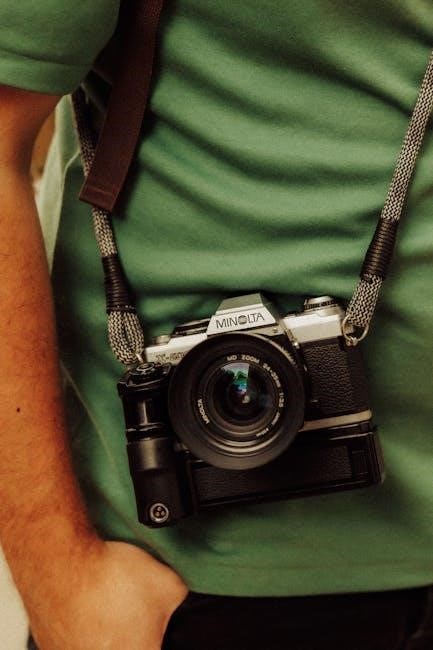
Film Loading and Unloading
The Minolta Maxxum 7000 instruction manual clearly outlines the correct film loading procedure and safe film unloading steps. Proper technique ensures film transport and prevents damage.
Correct Film Loading Procedure
According to the Minolta Maxxum 7000 manual, begin by opening the camera back. Insert the film canister into the right-side chamber and pull the film leader across to the take-up spool on the left. Ensure the film teeth engage properly. Close the back, and advance the film using the shutter button until the film counter displays ‘1’.
Safe Film Unloading
The Minolta Maxxum 7000 manual details a simple unloading process. Fully advance the film past the canister, then press the film rewind button located on the camera base. Open the camera back and lift the film canister and spool. Carefully remove the film, avoiding light exposure, and rewind it into the canister for safe keeping.
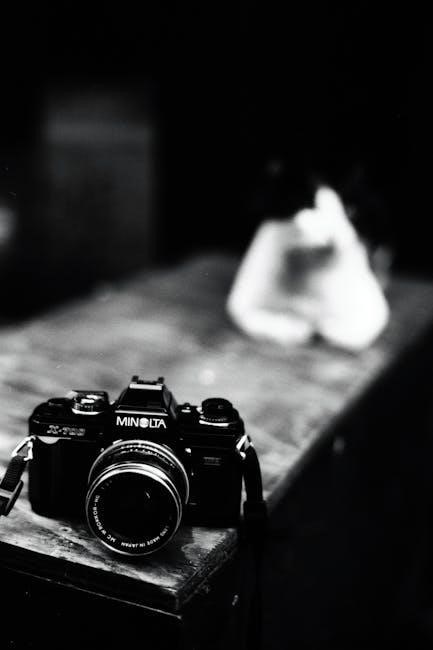
Battery Information
The Minolta Maxxum 7000 utilizes standard batteries, detailed in the instruction manual. Proper battery replacement ensures optimal camera function and prevents data loss.
Battery Type and Replacement
The Minolta Maxxum 7000 primarily requires 2CR5 lithium batteries for operation, as specified within the comprehensive instruction manual. Replacing these batteries is straightforward; locate the battery compartment, typically on the camera’s bottom. Ensure correct polarity during installation – positive and negative terminals must align properly. Always use high-quality batteries to guarantee reliable performance and avoid potential damage to the camera’s electronic components. Refer to the manual for detailed diagrams and safety precautions.
Battery Life Expectancy
The Minolta Maxxum 7000’s battery life varies significantly based on usage patterns, as detailed in the instruction manual. Generally, a fresh set of 2CR5 lithium batteries can power approximately 30-40 rolls of 35mm film. Frequent flash use, extensive menu navigation, and prolonged operation in cold temperatures will substantially reduce battery life. Regularly check the battery indicator in the viewfinder to proactively replace batteries.