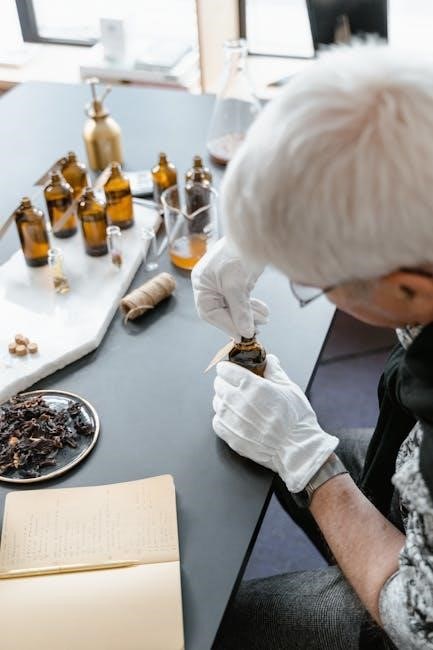
James Zubrick’s manual is a highly regarded, hands-on guide designed to equip students with essential organic chemistry laboratory techniques and safety protocols.
It’s a valuable resource, continually updated since 1984, focusing on practical skills needed for success in undergraduate organic chemistry coursework.
Overview of the Manual’s Purpose
Zubrick’s Organic Chem Lab Survival Manual serves as a comprehensive, practical guide specifically tailored to support students navigating the complexities of the organic chemistry laboratory. Its primary purpose is to demystify essential techniques, ranging from distillation and extraction to recrystallization, providing clear, concise instructions and explanations.
The manual doesn’t aim to replace a formal lab textbook, but rather to supplement it, acting as a readily accessible reference during lab sessions. It emphasizes safety protocols and proper equipment usage, fostering a confident and secure learning environment. The book’s consistent updates, reaching its 11th edition, demonstrate its commitment to reflecting current best practices and instrumentation within the field. Ultimately, it empowers students to perform experiments effectively and understand the underlying principles.
Target Audience: Undergraduate Organic Chemistry Students
Zubrick’s Organic Chem Lab Survival Manual is explicitly designed for undergraduate students enrolled in organic chemistry courses that include a laboratory component, typically at the sophomore or junior level. It caters to students who may be new to the practical aspects of organic chemistry, offering a foundational understanding of techniques and procedures.
The manual assumes limited prior laboratory experience, providing detailed guidance even for seemingly basic skills. It’s particularly beneficial for students seeking a readily available resource to reinforce concepts learned in lectures and lab demonstrations. The book’s clear, concise language and step-by-step instructions make it accessible to a wide range of learners, fostering independence and confidence in the lab setting. It’s a valuable tool for both preparation and review.
Historical Context: Editions and Updates (1984 ⸺ 2024)
Zubrick’s Organic Chem Lab Survival Manual first appeared in 1984, authored by James W. Zubrick, and has undergone numerous revisions and updates since its initial publication. This longevity demonstrates its sustained relevance and value within the organic chemistry education community. The manual has consistently evolved to reflect advancements in laboratory techniques, instrumentation, and safety protocols.
As of late 2024, the manual is currently in its 11th edition (Wiley, 9781119608554), showcasing a commitment to keeping the content current and aligned with modern laboratory practices. Each new edition incorporates feedback from instructors and students, ensuring the manual remains a practical and effective resource for generations of organic chemistry learners; The continued updates solidify its position as a trusted guide.
Core Techniques Covered in the Manual
Zubrick’s manual expertly teaches fundamental organic chemistry lab skills, including distillation, extraction, recrystallization, and spectroscopic analysis, preparing students for practical success.
Distillation Techniques
Zubrick’s Organic Chem Lab Survival Manual dedicates significant attention to mastering distillation, a cornerstone of organic chemistry. The manual thoroughly explains the principles behind both simple distillation and fractional distillation, detailing when each technique is most appropriately applied.
Students learn how to effectively separate liquids based on boiling point differences. The guide emphasizes proper setup of distillation apparatus, including careful attention to glassware like condensers and adapters. It also covers crucial aspects like heating rate control and collection of fractions.
Furthermore, Zubrick’s work highlights the importance of understanding the limitations of each method, ensuring students can accurately interpret results and troubleshoot potential issues during the distillation process. This practical approach builds confidence and competence in the lab.
Simple Distillation: Principles and Applications
Zubrick’s manual clearly outlines simple distillation as a technique best suited for separating liquids with significantly different boiling points – ideally, a difference of at least 25°C. The text explains the underlying principles of vapor pressure and how it drives the separation process.
Students are guided through the proper assembly of a simple distillation apparatus, emphasizing the role of each component. The manual details how to heat the mixture effectively, monitoring temperature to collect the desired fraction.
The Organic Chem Lab Survival Manual also stresses the importance of understanding potential errors, such as bumping and incomplete separation, and provides practical advice for minimizing these issues. It’s a foundational technique for purification.
Fractional Distillation: Enhancing Separation Efficiency
Zubrick’s manual expertly details fractional distillation as a refinement of simple distillation, crucial when dealing with liquids possessing closer boiling points. The core principle revolves around utilizing a fractionating column – packed with glass beads or rings – to increase the surface area for repeated vaporization and condensation cycles.
The text meticulously explains how this process leads to a more efficient separation of components. Students learn to control heating rates for optimal column performance and understand the concept of theoretical plates.
The Organic Chem Lab Survival Manual emphasizes careful observation of temperature gradients and collection of fractions, guiding users to achieve high purity. It’s a vital technique for complex mixtures.
Extraction Procedures

Zubrick’s manual dedicates significant attention to extraction procedures, fundamental for isolating desired compounds from reaction mixtures. It clearly outlines the principles behind liquid-liquid extraction, emphasizing the partitioning of solutes between two immiscible solvents.
The guide stresses the importance of selecting appropriate solvents based on solubility rules and polarity. Zubrick thoroughly explains how to maximize extraction efficiency through multiple extractions with smaller volumes, rather than a single large extraction.
Furthermore, the manual details acid-base extraction, a powerful technique utilizing pH adjustments to selectively transfer compounds into aqueous or organic phases. This allows for the separation of acids, bases, and neutral compounds, providing a versatile purification method.
Liquid-Liquid Extraction: Choosing Appropriate Solvents
Zubrick’s manual emphasizes that successful liquid-liquid extraction hinges on carefully choosing appropriate solvents. The text details the “like dissolves like” principle, guiding students to select solvents with similar polarities to the target compound.
It highlights the importance of considering solvent miscibility – the two solvents must be immiscible to form distinct layers. Zubrick provides guidance on common solvent pairings, like ether and water, and their respective advantages and disadvantages.
The manual also stresses the need to evaluate distribution coefficients (KD) to predict extraction efficiency. Students learn how to optimize solvent selection for maximum recovery of the desired product, minimizing contamination from impurities.
Acid-Base Extraction: Utilizing pH for Separation
Zubrick’s manual dedicates significant attention to acid-base extraction, a powerful technique for separating organic compounds based on their acidic or basic properties. It thoroughly explains how manipulating pH can selectively protonate or deprotonate compounds, altering their solubility.
The text details how carboxylic acids become soluble in basic aqueous solutions as carboxylates, while amines become soluble in acidic solutions as ammonium salts. Zubrick emphasizes the importance of understanding pKa values to predict ionization behavior at different pH levels.
Students learn to strategically adjust pH to transfer compounds between organic and aqueous phases, achieving clean separations. The manual also cautions against potential pitfalls, like emulsion formation, and provides troubleshooting tips.
Recrystallization Methods
Zubrick’s manual provides a comprehensive guide to recrystallization, a fundamental purification technique in organic chemistry. It stresses the importance of selecting an appropriate solvent – one where the desired compound is soluble at high temperatures but poorly soluble at low temperatures.
The text details a systematic approach, including dissolving the impure solid in a minimum amount of hot solvent, followed by slow cooling to induce crystal formation. Zubrick emphasizes the role of impurities remaining dissolved in the solvent.
He also covers crucial techniques like hot filtration to remove insoluble impurities before crystallization. The manual offers practical advice on optimizing crystal growth and maximizing product recovery, ensuring students grasp this vital purification process.
Solvent Selection for Optimal Recrystallization
Zubrick’s manual dedicates significant attention to solvent selection, recognizing it as the cornerstone of successful recrystallization. He advocates for choosing a solvent where the compound exhibits substantial solubility differences at varying temperatures – highly soluble when hot, sparingly soluble when cold.
The guide emphasizes testing several solvents to determine the ideal candidate, often employing a “like dissolves like” principle. Zubrick cautions against using a single solvent if it doesn’t provide sufficient purification, suggesting solvent pairs or mixtures.
He details considerations like boiling point, safety, and ease of removal, stressing a balance between purification efficiency and practical laboratory concerns. Proper solvent choice, as Zubrick explains, dramatically impacts crystal purity and yield.
Hot Filtration Techniques
Zubrick’s manual thoroughly covers hot filtration, a crucial technique for removing insoluble impurities during recrystallization. He stresses the importance of maintaining the solution’s temperature throughout the process to prevent premature crystallization within the filter apparatus.
The guide details proper setup, utilizing fluted filter paper and a pre-heated funnel to avoid cooling and subsequent product loss. Zubrick emphasizes careful pouring techniques to minimize spillage and ensure efficient filtration.
He also addresses potential issues like bumping and solvent evaporation, recommending appropriate heating controls and covering the funnel with a filter aid like Celite. Mastering hot filtration, as Zubrick illustrates, is vital for obtaining pure, crystalline products.
Essential Laboratory Equipment & Instrumentation
Zubrick’s manual meticulously details essential glassware – beakers, flasks, condensers – and spectroscopic tools like IR and NMR, vital for organic chemistry labs.
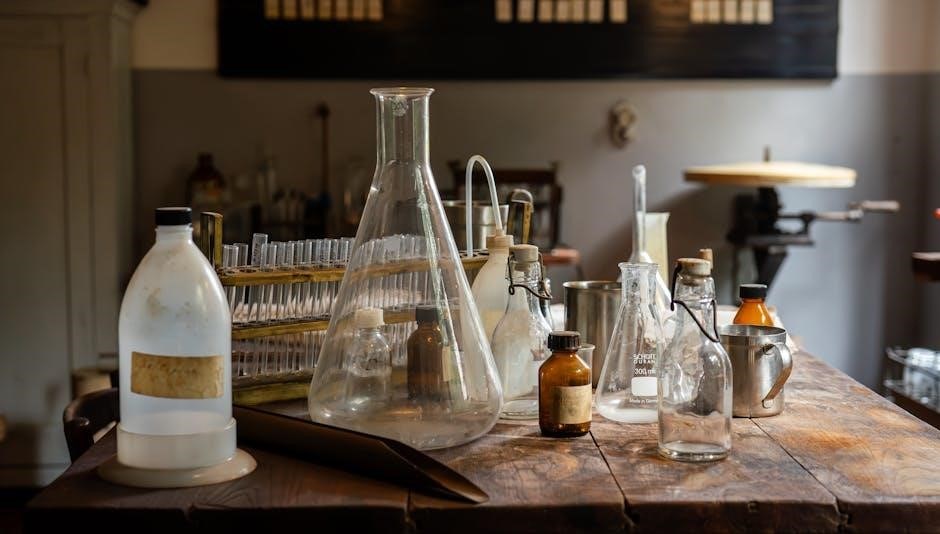
Glassware: Types and Proper Usage
Zubrick’s Organic Chem Lab Survival Manual emphasizes the correct selection and utilization of various glassware items. Beakers are presented as useful for general mixing and holding liquids, but cautioned against precise measurements.
Flasks, particularly round-bottom flasks, are highlighted for reactions and distillations, while graduated cylinders are stressed for accurate volume measurements. The manual details the importance of understanding the purpose of each piece.
Furthermore, condensers and specialized adapters are thoroughly explained, crucial for distillation and reflux setups. Zubrick stresses proper connections to prevent leaks and ensure efficient operation. The guide provides practical advice on handling glassware safely and effectively, minimizing breakage and maximizing experimental success.
Beakers, Flasks, and Graduated Cylinders
Zubrick’s manual meticulously details the appropriate uses of fundamental glassware. Beakers are presented as versatile for stirring and holding, but explicitly not for precise measurements due to inherent inaccuracies in their markings.
Flasks, especially Erlenmeyer and round-bottom varieties, are crucial for reactions, offering shapes suited for mixing and heating. Graduated cylinders are emphasized as the primary tool for accurate volume determination, with guidance on reading the meniscus correctly.
The guide stresses understanding the limitations of each; beakers for rough estimates, flasks for reactions, and cylinders for precision. Zubrick’s approach prioritizes selecting the correct glassware for the task, ensuring reliable experimental results.
Condensers and Adapters
Zubrick’s manual provides comprehensive instruction on condensers and adapters, vital for distillation and reflux setups. He details different condenser types – Liebig, West, and Allihn – explaining their varying cooling efficiencies and appropriate applications.
The guide emphasizes proper water flow direction for effective condensation, preventing backflow and ensuring efficient recovery of volatile compounds. Adapters, such as distillation heads and connecting adapters, are illustrated with clear diagrams, detailing their role in creating airtight seals and directing vapor flow.
Zubrick stresses the importance of secure connections to prevent leaks and potential hazards, reinforcing safe and effective experimental setups.
Spectroscopic Techniques
Zubrick’s manual introduces students to fundamental spectroscopic techniques crucial for compound identification and purity assessment. It provides a foundational understanding of Infrared (IR) Spectroscopy, explaining how to interpret characteristic absorption bands related to functional groups.
The guide then delves into the basics of Nuclear Magnetic Resonance (NMR) Spectroscopy, covering concepts like chemical shift, integration, and splitting patterns. Zubrick emphasizes correlating spectroscopic data with molecular structure, enabling students to confidently analyze unknown compounds.
He stresses the importance of proper sample preparation and instrument operation for obtaining reliable spectra, solidifying practical skills alongside theoretical knowledge.
Zubrick’s manual presents Infrared (IR) Spectroscopy as a vital tool for identifying functional groups within organic molecules. It explains that IR spectroscopy measures the absorption of infrared light, causing molecular vibrations.
The text details how different functional groups – like alcohols, ketones, and amines – absorb IR radiation at characteristic frequencies, resulting in distinct peaks on the spectrum. Zubrick emphasizes learning to recognize these key absorption bands.
He guides students through interpreting IR spectra, correlating peak positions and intensities with specific molecular structures. The manual stresses the importance of sample preparation for accurate results, ensuring a solid foundation for spectral analysis.
Nuclear Magnetic Resonance (NMR) Spectroscopy Basics
Zubrick’s manual introduces Nuclear Magnetic Resonance (NMR) spectroscopy as a powerful technique for determining the structure of organic compounds. It explains that NMR exploits the magnetic properties of atomic nuclei, specifically 1H and 13C, when placed in a magnetic field.
The guide details how NMR spectra provide information about the number of different types of hydrogen and carbon atoms, their chemical environments, and their connectivity. Zubrick emphasizes understanding chemical shifts, splitting patterns, and integration to deduce molecular structures.
He provides a foundational understanding of the principles behind NMR, enabling students to interpret spectra and confidently assign structures to unknown compounds. The manual stresses practical application and problem-solving skills.
Safety Protocols and Best Practices
Zubrick’s manual prioritizes lab safety, detailing proper chemical handling, storage, and waste disposal procedures for organic chemistry students.
It emphasizes emergency protocols, ensuring a secure learning environment and responsible laboratory conduct.
Chemical Handling and Storage
Zubrick’s Organic Chem Lab Survival Manual meticulously covers safe chemical handling, a cornerstone of any successful laboratory experience. The manual stresses understanding chemical hazards, including flammability, toxicity, and corrosiveness, before commencing any experiment.
Proper labeling of all containers is paramount, alongside awareness of Material Safety Data Sheets (MSDS) – now often referred to as Safety Data Sheets (SDS) – for detailed hazard information.
Storage guidelines are equally crucial; incompatible chemicals must be segregated to prevent dangerous reactions.
The manual details appropriate personal protective equipment (PPE), such as gloves, goggles, and lab coats, and emphasizes the importance of avoiding direct contact with chemicals.
Furthermore, it highlights responsible practices like never returning unused chemicals to original containers and proper ventilation to minimize exposure to hazardous vapors.
Waste Disposal Procedures
Zubrick’s Organic Chem Lab Survival Manual dedicates significant attention to responsible waste disposal, a critical aspect of laboratory safety and environmental protection. The manual emphasizes that improper disposal can lead to hazards and legal repercussions.
It details the segregation of waste streams – halogenated versus non-halogenated solvents, aqueous waste, and solid waste – into appropriately labeled containers.
Students are instructed never to pour chemicals down the drain unless specifically authorized, and to avoid mixing incompatible wastes.
The manual stresses adherence to institutional guidelines and regulations regarding waste disposal, often involving designated waste collection points and specific container types.
Proper documentation of waste contents is also highlighted, ensuring accurate tracking and safe handling by waste management personnel.
Emergency Procedures in the Organic Chemistry Lab
Zubrick’s Organic Chem Lab Survival Manual prioritizes safety, dedicating a crucial section to emergency procedures. It emphasizes proactive preparation, including knowing the location of safety equipment like fire extinguishers, eyewash stations, and safety showers.
The manual details responses to common lab emergencies: chemical spills, burns, cuts, and fires. Students are instructed on proper spill containment and cleanup techniques, utilizing appropriate absorbents and personal protective equipment.
Immediate reporting of all incidents, no matter how minor, is stressed, alongside knowledge of emergency contact numbers and evacuation routes.
Specific guidance is provided for dealing with chemical exposure, including first aid measures and the importance of seeking medical attention.
The manual reinforces the need for calm, clear communication, and adherence to established laboratory protocols during any emergency situation.
Troubleshooting Common Lab Issues
Zubrick’s manual expertly addresses frequent problems like low yields, troublesome emulsions during extractions, and recrystallization difficulties, offering practical solutions for students.
Low Yields in Reactions
Zubrick’s Organic Chem Lab Survival Manual dedicates significant attention to diagnosing and rectifying low reaction yields, a common frustration for students. The manual emphasizes meticulous technique as a primary factor; incomplete reactions due to insufficient reaction time or improper stoichiometry are addressed.
It guides students to carefully re-examine reaction conditions, ensuring accurate measurements of reagents and appropriate temperature control. Zubrick stresses the importance of verifying reagent purity and considering potential side reactions that may consume starting materials.
Losses during workup and purification, such as transfers and recrystallization, are also highlighted. The manual encourages diligent product recovery techniques and provides strategies for minimizing material loss at each stage, ultimately maximizing the isolated yield.
Emulsions During Extraction
Zubrick’s Organic Chem Lab Survival Manual thoroughly addresses the pervasive issue of emulsion formation during liquid-liquid extractions. Recognizing emulsions as stable mixtures of immiscible liquids, the manual details several strategies for their breakage. Gentle swirling instead of vigorous shaking is initially recommended to minimize initial emulsion development.
Zubrick suggests adding saturated sodium chloride solution to increase ionic strength, promoting phase separation. Careful, slow stirring and allowing ample settling time are also emphasized. If these fail, the manual advises gentle warming or the cautious addition of a small amount of a different solvent.
Filtration through Celite or a plug of cotton can mechanically break stubborn emulsions, recovering the desired product. The manual stresses patience and avoiding forceful methods that could lead to product loss.
Difficulties with Recrystallization
Zubrick’s Organic Chem Lab Survival Manual dedicates significant attention to troubleshooting recrystallization challenges. A common issue is premature crystallization during heating; the manual advises using a larger flask to prevent “bumping” and employing gentle heating methods. Oil-out, where the compound separates as an oil instead of crystals, is addressed by adding more solvent and re-heating slowly.
If no crystals form upon cooling, Zubrick recommends “seeding” with a tiny crystal of the pure compound or scratching the flask’s interior to induce nucleation. Impurities can hinder crystallization; the manual suggests using activated charcoal during heating to adsorb colored impurities.
Slow cooling and avoiding disturbance are crucial for forming large, pure crystals, as detailed within the manual’s guidance.

Appendices and Reference Materials
Zubrick’s manual includes vital appendices with physical properties of common solvents and spectroscopic data tables, serving as quick references for students in the lab.
Physical Properties of Common Solvents

Zubrick’s Organic Chem Lab Survival Manual recognizes the critical importance of solvent knowledge for successful experimentation. This section meticulously details the physical properties of frequently used solvents in organic chemistry laboratories.
Students gain access to essential data, including boiling points, melting points, densities, refractive indices, and dielectric constants for solvents like hexane, diethyl ether, ethanol, acetone, and dichloromethane.
Furthermore, solubility parameters and miscibility information are provided, aiding in informed solvent selection for extractions, recrystallizations, and reaction media.
This comprehensive compilation empowers students to predict solvent behavior, optimize experimental conditions, and troubleshoot potential issues related to solvent properties, ultimately enhancing their laboratory proficiency.
Spectroscopic Data Tables
Zubrick’s Organic Chem Lab Survival Manual provides crucial spectroscopic data tables to assist students in compound identification and structure elucidation. Recognizing the importance of spectral analysis, the manual includes characteristic absorption values for both Infrared (IR) and Nuclear Magnetic Resonance (NMR) spectroscopy.
IR correlation tables link functional groups to specific wavenumber ranges, enabling students to interpret IR spectra effectively. NMR data tables offer chemical shift ranges for protons and carbons in various chemical environments.
These tables serve as valuable references, aiding in the assignment of peaks and the confirmation of molecular structures.
By providing this readily accessible data, Zubrick empowers students to confidently analyze spectroscopic results and deepen their understanding of organic compounds.